
The proposed 8th Pay Commission has become a major topic of discussion among central government employees and pensioners in India. The commission is expected to review and revise salaries, pensions, and allowances of government employees in line with rising inflation and changing economic conditions.
The previous commission, the 7th Central Pay Commission, was implemented in 2016. With several years having passed since then, employees are now eagerly waiting for updates regarding the next pay revision.
What Is the 8th Pay Commission?
A pay commission is a body set up by the Government of India to review and recommend changes to the salary structure of central government employees.
The commission evaluates important aspects such as:
- Basic salary structure
- Grade pay
- Allowances and benefits
- Pension schemes
After reviewing these factors, the commission submits recommendations to the government, which then decides whether and how to implement them.
What Is the Fitment Factor?
The fitment factor is a crucial element used to calculate the revised basic salary of government employees. It is a multiplier applied to the existing basic pay to determine the new salary.
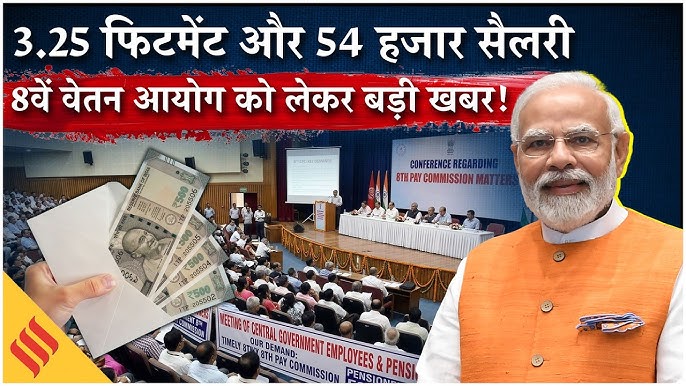
Employee unions are reportedly demanding a fitment factor between 3.00 and 3.50. If a 3.25 fitment factor is approved, it could lead to a significant increase in salaries.
Example of Salary Increase
For instance, if an employee currently has a basic salary of ₹18,000, applying a 3.25 fitment factor could increase the basic pay to around ₹58,500.
However, this is only an estimate. The final salary structure will depend on the recommendations of the commission and the government’s approval.
Key Demands from Employee Unions
Several employee organizations have raised important demands related to the upcoming pay commission. Some of the major demands include:
- Increasing the fitment factor to 3.25 or higher
- Restoration of the Old Pension Scheme (OPS)
- Annual salary increments of up to 5%
- Increase in medical allowance and other benefits
- Better promotion opportunities for employees
The government is reportedly reviewing these demands, but no official confirmation has been announced yet.
When Could the 8th Pay Commission Be Implemented?
So far, the government has not officially released recommendations for the 8th Pay Commission.
However, reports suggest that if the commission is constituted soon and completes its review process, the new pay structure could potentially be implemented from January 1, 2026.
In many previous cases, employees received arrears later after the official implementation date, so a similar situation could occur again.
What It Means for Government Employees
If the 8th Pay Commission is implemented with a higher fitment factor, millions of central government employees and pensioners could benefit from increased salaries and pensions.
Higher pay and improved allowances would help employees manage rising living costs and inflation more effectively.
Conclusion
The 8th Pay Commission remains under discussion, and government employees across India are closely watching for official announcements. While expectations of a significant salary hike are high, the final decision will depend on the government’s approval and the commission’s recommendations.
Until then, employees and pensioners will continue to wait for clarity on the next major salary revision in the central government pay structure.