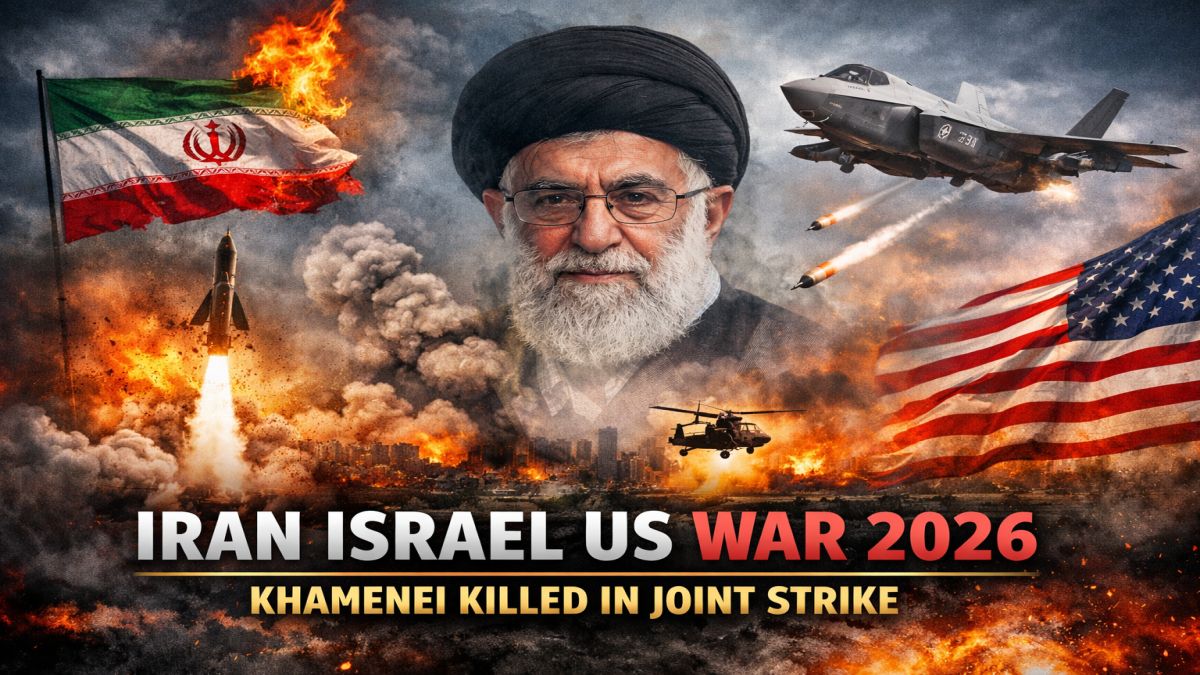
Iran Israel US War 2026: The Middle East is once again at the center of global attention after a dramatic escalation between Iran, Israel, and the United States. What began as rising tensions has now turned into direct military confrontation, shaking global politics, energy markets, and regional stability.
The biggest shock in this conflict is the reported killing of Iran’s Supreme Leader, Ayatollah Ali Khamenei, during joint military strikes carried out by Israel and the United States. His death marks one of the most significant turning points in modern Middle Eastern history.
Let’s understand what is happening and why it matters.
What Happened?
In late February 2026, the United States and Israel launched coordinated air and missile strikes targeting strategic military and leadership locations inside Iran. These strikes were described as precision operations aimed at weakening Iran’s military infrastructure.
During these attacks, reports confirmed that Iran’s Supreme Leader, Ayatollah Ali Khamenei, was killed. He had been the highest authority in Iran since 1989 and was considered the most powerful figure in the country.
His death has created a major political shock inside Iran and across the region.
Who Was Ayatollah Khamenei?
Ayatollah Khamenei was not just a political leader — he was the highest religious and political authority in Iran. As Supreme Leader, he controlled:
- The armed forces
- National security decisions
- The judiciary
- Key political appointments
For nearly four decades, he shaped Iran’s foreign policy, especially its opposition to Israel and its tense relationship with the United States.
His leadership strengthened Iran’s regional influence through alliances and military partnerships across the Middle East.
Why Did the Conflict Escalate?
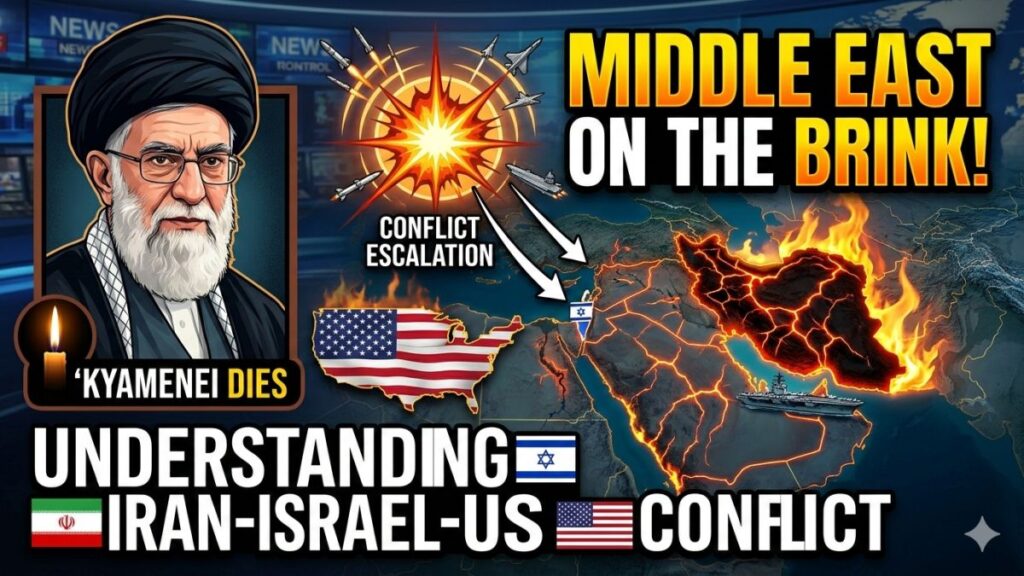
The tensions between Iran and Israel have existed for decades. Israel considers Iran a major threat due to:
- Iran’s missile development programs
- Its support for armed groups in the region
- Concerns over nuclear ambitions
The United States has also had a long history of conflict with Iran, involving sanctions, diplomatic breakdowns, and military incidents.
Recent months saw rising military activity, warnings, and indirect clashes. The latest joint strikes by Israel and the US marked the first time such a high-level leadership target was eliminated inside Iran, dramatically escalating the situation.
Iran’s Response
Following the strikes and confirmation of Khamenei’s death, Iran declared national mourning and promised retaliation. Missile launches and drone activity targeting Israeli territory and US military positions in the region were reported shortly after.
Iran’s military leadership has described the strikes as an act of war. The risk of further escalation remains extremely high.
What This Means for the World
This conflict is not limited to three countries. It affects the entire world in several ways:
1. Regional Stability
Middle Eastern countries are on high alert. Any expansion of this conflict could pull more nations into direct confrontation.
2. Oil and Global Economy
The Middle East is central to global oil supply. Any instability in the region can increase fuel prices worldwide and impact economies.
3. Political Uncertainty Inside Iran
With the death of its Supreme Leader, Iran now faces a leadership transition during wartime. This creates uncertainty about who will take control and what direction the country will follow.
4. Risk of Wider War
If retaliation continues and international alliances activate, the situation could expand beyond the region.
What Happens Next?
The coming days and weeks will be critical. Several outcomes are possible:
- Diplomatic intervention to prevent full-scale war
- Continued missile exchanges and targeted strikes
- Internal political restructuring inside Iran
- Increased global pressure for ceasefire
At this stage, the world is watching closely. Leaders across continents are urging restraint, while military forces remain on high alert.
Final Thoughts
The reported killing of Ayatollah Khamenei has transformed a long-standing geopolitical rivalry into a historic turning point. Whether this becomes a prolonged regional war or moves toward diplomatic resolution will depend on decisions made in the immediate future.
For now, the Middle East stands at one of the most dangerous crossroads in recent history.
Stay connected with nowontrend.com for further updates and in-depth analysis on this developing global crisis